about

Since 2010, many netlabels and artists publish their new free music releases on the clongclongmoo website. Free means that you don't have to pay anything or register to download music. However, you can usually pay something to support the artists. Please note the licenses under which the music is published. This is important to know what you are allowed to do with the music. Please visit the labels' homepages to get the free music. Most files are published under a creative commons licence. At netlabellist you will find an extensive list of websites that also offer (or have offered) free music. If you run a netlabel yourself or offer your music for free and want to draw attention to it, you are welcome to use the submission form. And remember that clongclongmoo is not there to do business, because “Business Is Not My Music.”

music tagged with: acousmatic

Laurent Fairon – Redivivus

Laurent Fairon – Redivivus

Laurent Fairon

“Redivivus”

Musique concrète suite for bullroarer, church organ, cimbalom, vocoder, boat horns, Romanian Catholic choir, Indian ashram temple bell, Radio Afghanistan station ID, and other aural ablutions. Researching melodic patterns in musique concrète.

Recorded in July–August, 2021 in Paris and Poitiers, France.
L.F.: found sounds, samples, loops, sound collage, virtual synth, artwork.

Button: by-nc
posted 08 September 2021

evoked response & CLOrk – untitled​/​revisited (Live at Concordia University)

evoked response & CLOrk – untitled​/​revisited (Live at Concordia University)
[ACP 1323]

evoked response & CLOrk

“untitled​/​revisited (Live at Concordia University)”

evoked response: Eric Boivin & Albérick

CLOrk : Mo Abbas, Marcus Aterman, Didier Bergeron, Nicholas Brown-Hernandez, Aidan Charlton, Arthur Yi Duo Chen, Thomas Christie, Kevin Cogen, Bennett Dobni, William Graham-Simpkins, Jared Jukes, Simon Lacelle, Tyler Lewis, Dario Lozano-Thornton, Timothy MacKenzie, David Macri, Ryan Jeffrey Ockenden, Andres Andy Poblete, Adrian Roy Taylor, David Philip R. Russell, Thomas Speakman, Vanessa Zaurrini.
Eldad Tsabary, dir.

Recorded live at Concordia University, Room 8.245, January 29th 2015.
Recorded & mixed by Eldad Tsabary.

photos by Dan Penschuck (feindesign.de)
design by EMERGE

Button: by
posted 16 August 2021

Gustavo Becerra-Schmidt – Obra Electroacustica

Gustavo Becerra-Schmidt – Obra Electroacustica
[pn036]

Gustavo Becerra-Schmidt

“Obra Electroacustica”

(10 Years Ago)

Any review or comment about Chilean art music necessarily mentions composer Gustavo Becerra-Schmidt. This is not the case for his electronic and electroacoustic music, which seemed to be somewhat hidden or overlooked (until the uploading of his «Obra electroacústica» in 2008 by Pueblo Nuevo Netlabel), far from those who have wanted to approach this Becerra realm, where time seems to be standing still. These pieces -the ones played by machines- create a strange, disturbing sound space. Here, silence makes sound disappear, mingling with it, making it mutate. As if muted by a black hole, generating a gravity field absorbing everything around, but, because of this very quality, densifying it, making it murmur.

The release of almost all electronic works by Becerra (including mixed media, electronic, and electroacoustic pieces,) is an important and extremely necessary gesture for Chile, where the commitment for recovering immaterial heritage easily falls into oblivion. Through these works, the fortunate use of technologies around in the 70s, the 80s, and years to come, Becerra seemed to grasp the turn this kind of work would offer to compositional inventiveness as a whole: synthesizers, all kinds of artifacts and computers were used by him to generate other sounds, other forms and structures, other rhythms, weird harmonies.

As expressed by musical environment around him (in no way restricted to scores, for folklore, popular music and pieces for theater and movies were also part of his surroundings), Becerra has left a fundamental legacy, not just as a composer -being this an enormous opus. Cirilo Vila, Gabriel Brncic, and Fernando García -among many outstanding musicians in Chilean scene- were his students, which eloquently proves Becerra’s panache for teaching, even though for him the concepts of «talent» and «teaching» music (confusing matters these two), were profoundly questioned in two acclaimed papers of his: «El mito del talento en música» (1969) and «Crisis de la enseñanza de la composición en occidente» (1958-1959). In the latter, Becerra accounts for a disease that, through the years, seems to have spread out to a fair amount of composers’ brains: «Never as today there is a tiresome insistence in writing music according to a theory, i. e., to a set of mostly intellectual hypotheses. This has taken, as we said, not only to a distance between the composer and the audience, but also between himself and his work.

Juan Pablo Abalo
Compositor. Crítico musical / Composer. Music critic.
(Santiago, Chile. Julio / July 2010)

Button: by-nc-sa
posted 20 July 2021

Jose Vicente Asuar – Obra Electroacustica

Jose Vicente Asuar – Obra Electroacustica
[pncd08]

Jose Vicente Asuar

“Obra Electroacustica”

(10 Years Ago!)

We are proud, pleased and glad to present, at last, this CD release of the electroacoustic work by José Vicente Asuar.

This is a carefully crafted compilation, both a record and a symbol of a unique oeuvre coming from Chile – an aim thoroughly pursued by Comunidad Electroacústica de Chile, Pueblo Nuevo Netlabel, and Escuela de Música de la Universidad Arcis (via Laboratorio de Informática Musical) in this new joint venture.

The strange and anomalous presence of this visionary in our Arts history, fully acknowledged as a creative music pioneer both in Chile and abroad, has generated a slowly growing interest in several realms of our local culture. In order to understand this fully, checking local and foreign literature on Asuar’s releases, prizes and commissions -proof of recognition and value of his work- suffices. During the 90’s, his presence fades, as he turns away from composition, to be rescued and rediscovered by the early 2000s. Harmonic mixture of composer and engineer, Mr. Asuar researched and generated electronic sound technologies, creating with them a deeply expressive and personal music: maybe the first devices created and modified in Chile in the late 50’s; the first fully synthesized work composed in our country and/or Latin America, in 1959; the implementation of Sound Technology career at Universidad de Chile, in 1969; setting up electroacoustic music studios in Germany (1960) and Venezuela (1966), are all consequences of his pursuit, as well as the composition of works that explored sound/ music continuities and discontinuities, ranging from natural to human to synthetic materials; designing a music-making-oriented computer of his own, unique in the world at that time (1978), all landmarks of a paradigmatic local pioneer. His work presents the convergence of certain aspects of musique concrète, linked to an Art Music context, where serialism techniques, computer-assisted composition via heuristic processes, and an exquisite flair for sound synthesis, flow in a particularly free and personal way.

Nowadays, his technical and artistic work is both a direct and indirect catalyst for musicians and artists from all disciplines and generations. In more than one realm he is recognized as an influence: in his electroacoustic music, his pioneer, multidisciplinary approach to computer music; his albums, devoted to teaching and uncovering the potential possibilities of electronic music; his aesthetic-technical writings on electroacoustic music. Even factors superficially addressed by popular culture, such as the longtime mystery concerning his whereabouts, or the retro aesthetic of a couple of his LPs.

History presents Asuar as an precedent, but I would point him out also as a present-day ‘cedent’ (if it’s possible to put it that way), for he’s still signalling, gravitating, and pushing a way of understanding, creating, but, most of all, dreaming. He represents not only the blending of the musician and the engineer, but also the committed scholar and the supportive maestro, who wants technology to put the wonder of Music onto our hands…

All those features, so commonplace nowadays, were dreamt years ago by José Vicente Asuar.

Alejandro Albornoz
Secretario Comunidad Electroacústica de Chile CECh.
Curador / Curator. Co-productor / Co-producer Colección Electrocústica 2010.
(Santiago, Chile. Marzo / March 2011)

Button: by-nc-sa
posted 20 July 2021

CorteX – New Ordeal World

CorteX – New Ordeal World
[LCNEP021]

CorteX

“New Ordeal World”

The Necrophile Hummingbird presents the aftermath of a funny spiritual experience. “Acousmatic Music for the Concrète People”
This EP will be part of the album “La Fête du Sillon Sacré”.
No Undergods Were Harmed in the Making of this EP.

Full EP in free download in Flac or Wav on this bandcamp profile yoshiwaku.bandcamp.com/album/new-ordeal-world

The first two tracks designed for this french selfportrait podcast
aligrefm.org/agenda/le-colibri-necrophile-ed-end-480

Which may be related to Ordalie Found Footage https://www.youtube.com/watch?v=baYeo97yqQA

Last year full (except rADio eNd) retrospective is interesting for a global hearing.
https://panoramamix.tumblr.com/post/623102835945537536/ed-ends-retrospective-a-free-to-share

Cinemix :
Bugey pour mémoire

More free music by CorteX
archive.org/details/le-colibri-necrophile?and%5B%5D=creator%3A%22cortex%22

Button: by-nc-sa
posted 08 June 2021

Laurent Fairon – Elecktronische tsimtsum

Laurent Fairon – Elecktronische tsimtsum

Laurent Fairon

“Elecktronische tsimtsum”

Laurent Fairon – Elecktronische tsimtsum

Electroacoustic and musique concrète recorded from February to May 2021 in Paris, France.

01 Écoute construite (4:22)
02 Elecktronische TsimTsum (18:53)
03 Rire hérité (6:39)
04 Holodomor (9:49)
05 Cadastre (11:39)

Total time: 51mn 25

Button: by-nc
posted 31 May 2021

"Various Artist" – 3pr(iii)9ses

"Various Artist" – 3pr(iii)9ses
[earS103]

“Various Artist”

“3pr(iii)9ses”

1 – Robert Cole Rizzi “Wind, Water, Wood”
I went out sound hunting on february 26th 2021. Had an idea about recording the ambient sound as well as a contact mic recording of a tree simultaneously… Went to a nearby place by a stream, where I knew there would be reasonably quiet.
It was kind of windy, so there’s some low rumble in the recording from the tall trees
3 channels 2 from Lewitt LCT 540S’s in NOS and 1 from the Schertler “tree bug” microphone, mixed into stereo
www.facebook.com/robertcole.rizzi

2 – Frédéric Nogray “Hydroboulisme cauchemar d’une sardine en boite”
C’est avec étonnement et fascination que nous sommes invités à partager les tribulations ombrageuses d’une sardine en ivresse parmi quelques unes de ses consoeurs sur la piste de danse d’un recoin reculé du Canal de l’Ourcq à Paris capturées lors d’une chaude journée de printemps 2015 par la membrane attendrie d’un microphone jeté là par dépit par son propriétaire qui recherchait rageusement la roue avant de son vélocipède ayant de toute évidence du se jeter dans les eaux tumultueuses du canal dans le but plus qu’évident de se rafraichir. An extraordinary and historic document of such things that sometimes happened far from the ears of a common nature.
fredericnogray.bandcamp.com/

3 – Acoustic Mirror “Threshold”
“Threshold” is the result of one of many work processes I engaged with while researching the condition of listening under confinement. In this case, I resorted to the sound-activated recording feature of a small handheld recorder. Sound-activated recording needs an indication of what sound level is to be recorded – this is the so-called threshold. I configured it and set it up in my studio, and went around my usual chores.

The resulting recordings ranged from basic room tone, footsteps, housekeeping and other domestic soundscapes, and the occasional street noise, all starting with a particular sound that went, so to speak, over the threshold.
acousticmirror.tumblr.com

Button: by-nc-sa
posted 16 May 2021

Jose Miguel Candela – Hombres en Círculo Durante el Hechizo del Tiempo

Jose Miguel Candela – Hombres en Círculo Durante el Hechizo del Tiempo
[pn185]

Jose Miguel Candela

“Hombres en Círculo Durante el Hechizo del Tiempo”

I composed “Hombres en Círculo Durante el Hechizo del Tiempo” (Men in a Circle During the Spell of Time) in 1998 for the choreography and video-dance homonyms of «La Vitrina» dance company (Chile). This scenic creation sought to pay tribute to the ancient cultures of the extreme south of America (Aonikenk, Yamana, Selk’nam, Alakaluf), claiming and valuing their heritage through a reinterpretation from contemporary dance. In other words, it was not a representational rescue of the possible original Fuegian dances, but rather a western and contemporary «artifact». Thus, it also tried to testify through its artistic materiality on the extermination policy to which Chile subjected these cultures.

Today, 23 years after its composition, I present this music for the first time on a disc, thus adding a new volume to the “Greatest Dance Hits Collection”, a series of publications that compiles the music that I have composed for contemporary dance during the latter 25 years.

The music was made for 1 and 2 string quartets, with eventual sound interventions and electronic processes, and also with a delicate treatment of its internal space. I worked for its creation with different shamanic songs used by Lola Kiepja (last Selk’nam shaman) and recorded by the Canadian anthropologist Anne Chapman in Tierra del Fuego. In this way, both, I made variations of these songs and re-constructions “in style”, imitating their rhythmic and melodic characteristics. All this in a minimalist context and with free development.

Although the choreographic work claimed to have four parts (“La ausencia, la fragmentación”, “La muerte muerde silenciosa la carne”, “La vida: la recolección – la caza”, and “El rito”), for this album I decided to propose more divisions, to be faithful to the musical structure (a structure that was related to choreography in an interdependent way). In any case, I indicate in the name of the track to which part of the choreographic work each of the 9 tracks on this album belongs.

José Miguel Candela
(Santiago, Chile. Abril / April 2021)

Button: by-nc-sa
posted 24 April 2021

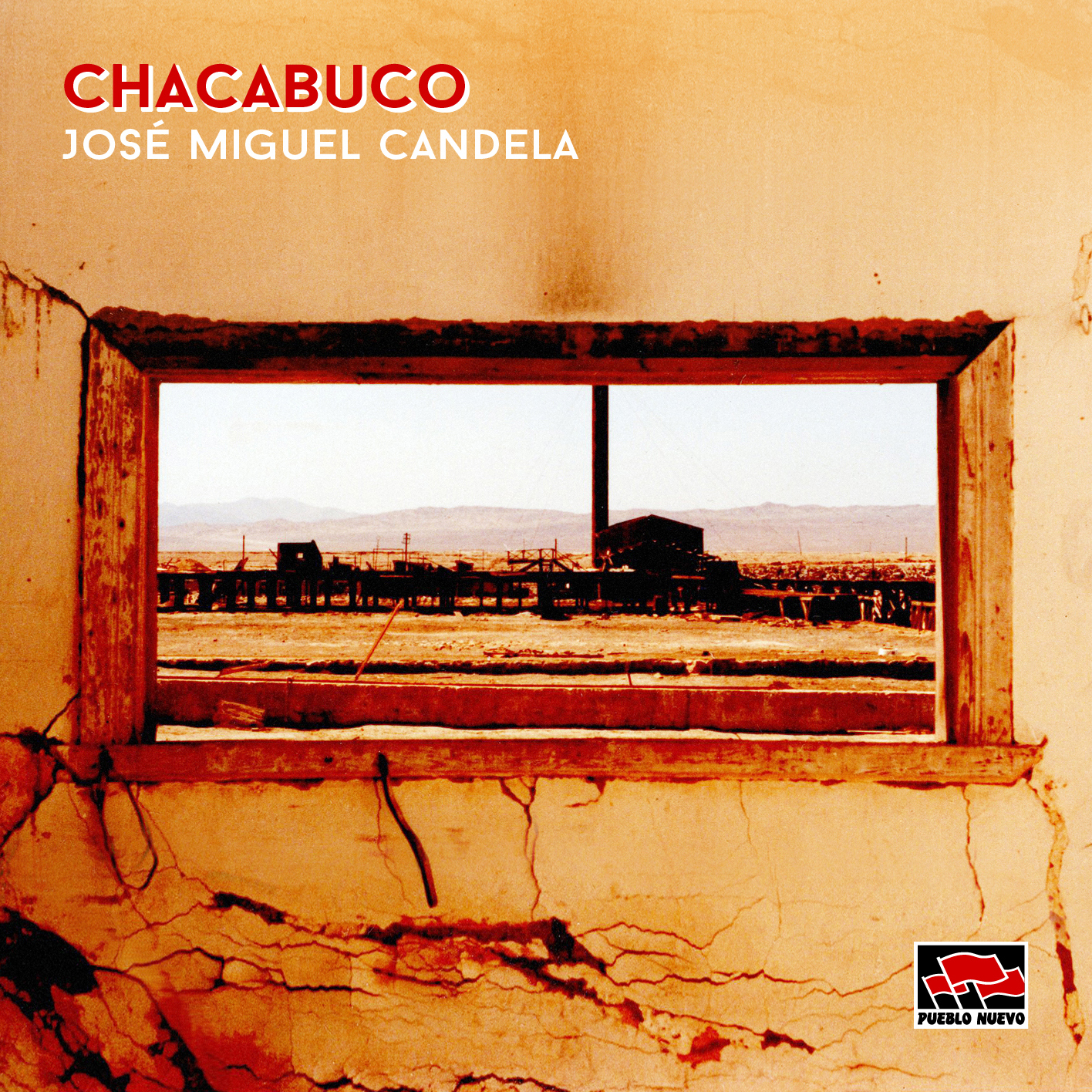
Jose Miguel Candela – Chacabuco

Jose Miguel Candela – Chacabuco
[pn184]

Jose Miguel Candela

“Chacabuco”

The first edition of “Chacabuco” (in cassette format) was in 1996. In this the music composed for the choreography and video-dance * homonyms of the La Vitrina dance company (Chile), where the experience was rescued of the bodies that suffered the Chacabuco saltpeter mine works as an economic prison (in times of the nitrate boom) and as a concentration camp (during the Pinochet dictatorship in Chile). This music was not only my first of many collaborations with this artistic collective, but it was also my first composition for contemporary dance, an artistic field to which I have dedicated my musical life ever since. Today, 25 years after its composition and editing, I present this music again, remastered for its virtual disk format, to share this piece of history with new generations.

With this album, we also inaugurated, always with Pueblo Nuevo Netlabel‘s unconditional support, the “Greatest Dance Hits Collection”. This series of publications will attempt to compile the music that I have composed for contemporary dance during the last 25 years.

All work was composed, sequenced, and mixed on the Ensoniq TS-12 workstation. Much of the sounds of “Chacabuco” were recorded directly there and then sampled for use in this workstation.

In the text of the original 1996 cassette, it noted the following:

Being in Chacabuco is not an experience that is easily forgotten: all that strength contained in each of its machines (“cachuchos”), in its streets and houses destroyed by deaf sounds, in its land (crunchy by the saltpeter), and in its evening wind (a great shaker of unclamped roofs) leaves a mark, an invisible (but powerful) mark, in the last emotional corners of those who visit it. I hope that these intangible impressions are somehow reflected in this composition.

The resulting language of “Chacabuco” would not have been possible without my previous “Give me a Loop”, a personal project born in May 1996. “Give me a Loop” reflects my search for intimate corporal rhythms (search for a corporal ritual), and therefore of a musical language according to this search. From another point of view, the loop (the repetitive cycle and in this case, the micro-cycle) is found as an independent life; in its spatial movement, and at the same time trapped in its limitations; releasing itself through repetition, but dying out to make way for new cycles.

Finally, “Las huellas del Pequeño Venado” (“The Little Deer Traces”) (completed in December 1996), is also inserted within this language. The Huichol shamans, in one of their sacred rites, manage to see these footprints of the little deer (magical animal), the one that will lead them to the first peyote. For this reason, it is the beginning of the journey to the unknown.

(*) “Chacabuco – eslabón en la memoria” is the first video-dance in the history of the genre in Chile.

José Miguel Candela
(Santiago, Chile. Marzo / March 2021)

Button: by-nc-sa
posted 26 March 2021

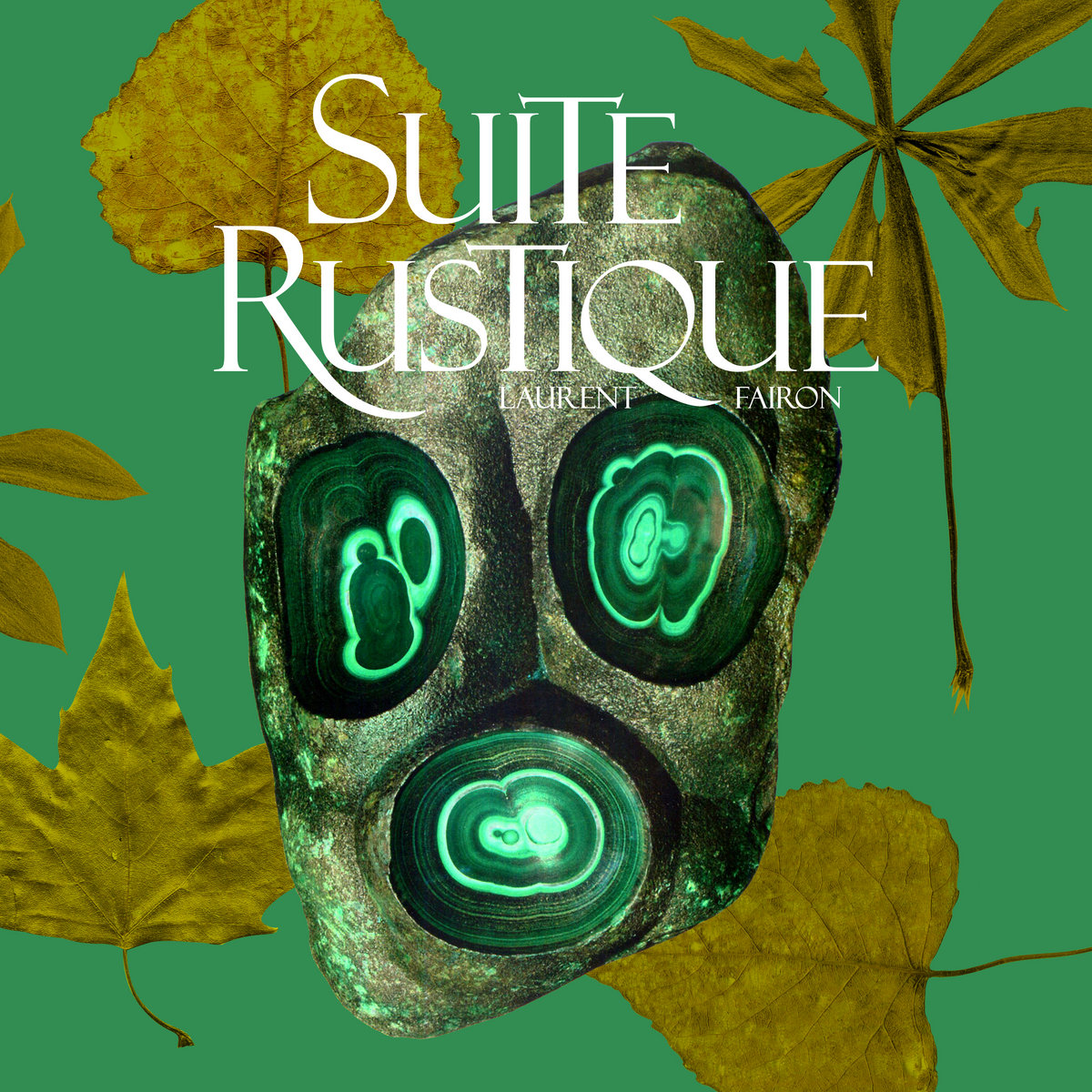
Laurent Fairon – Suite Rustique

Laurent Fairon – Suite Rustique

Laurent Fairon

“Suite Rustique”

Suite Rustique is a collection of musique concrète tracks recorded during winter 1990–91 in Angoulême, France. The album features experimental and collage music inspired by nature sounds – animals, gardening, hunting, bird watching. Sounds were created using traditional music instruments, self-build instruments, manipulated cassette tapes, mini Casio sampler, sound effects, voice, poetry. The album also features 2 poems by the composer. All originally recorded and mixed on a Tascam Porta 05 analog 4-track cassette recorder.

First published as a special, handmade packaging cassette limited to 5 copies given to friends. Reissued by French cassette label Nos Yeux Aveugles as side B of “2 Pistes (A & B)”, 1991 – see Discogs.

Recorded in 1990–91.
Digitized and remastered in February 2021.
Total time: 41mn.
Artwork+design: L.F. 2021.

Button: by-nc
posted 10 February 2021

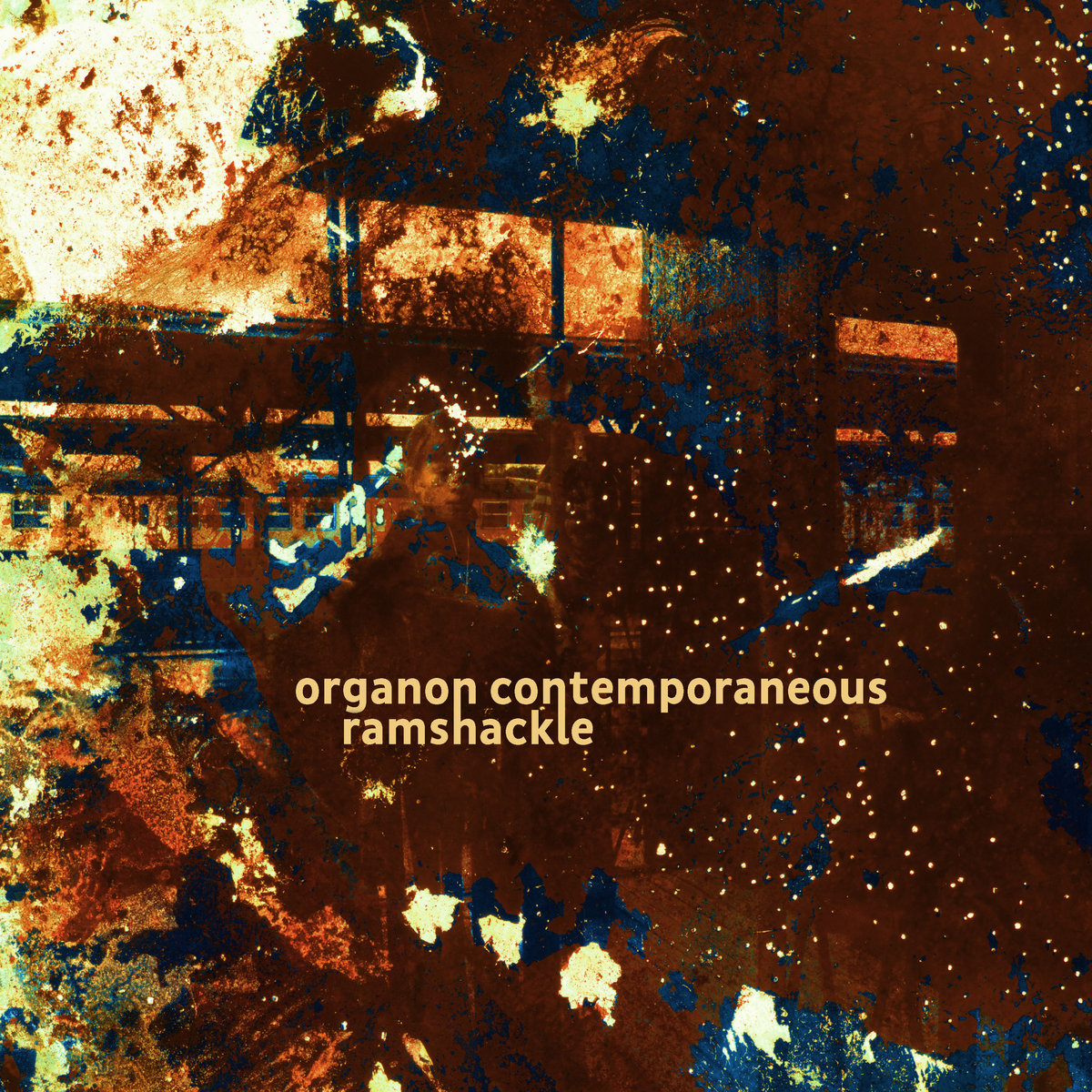
organon contemporaneous – ramshackle

organon contemporaneous – ramshackle
[ACP 1298]

organon contemporaneous

“ramshackle”

cover art by Claus Poulsen
design by EMERGE

ramshackle is an album composed of 6 files, which rises within the avant-garde music, without time or balance. Only the cinematic sound that transports us to the unstable and decrepit world of sounds processed from synthesis by micro-assembly and convolution techniques. In a world in which the technique is tuned by the intermittency and instability in which chaos prevails. Alternated by deep, fruitful and parameterized sounds through the junction and caustic frequencies.

Button: by
posted 09 February 2021

Roy Guzman – Logica Axiomatica

Roy Guzman – Logica Axiomatica

Roy Guzman

“Logica Axiomatica”

Roy F GuzmanAlgorithmic and instrumental electronic music composer, improviser, and poet born in San Juan, Puerto Rico on June 28, 1987. His previous and current research topics are chaos theory for structural musical material, abstraction as a subject worked through the instrumental interpretation of sound scoresusing them as a metaphor of the perception of all reality,resilience, the authentic limitations of systems, non-duality, aximoms of conceptual and phisical objects, geometrical abstract forms in musical structuresand the study and formalization of the reading action of non traditional scoresand the expansion of the musical parametrizationandconstructs.Recently he explores Meta Composition where the metaphysicsand physics are affected by thestructuresand objectsof compositional forms, symbols and texts.He created Concrete Multi Semiotic Poetry where synchronous and asynchronous multi semioticism is explored and Integral Poetry where a semiotic color is explored as an integral of a multi semioticism of a universal and popular gestalt.He also investigates and creates deductions about the metaphysics of ancestral Latin American spirituality and its axiomatic potential and abstract development for the creation of new constructs and philosophies that have the potential to alter the perceptual reality and metaphysical or spiritual space.

Lógica AxiomáticaThis series of piecesdeals with the concept of Axiomatic Logic. It is a synthesis of two philosophical conceptsand its lay definitions: Axioms and Logic. The intention of thisconceptual musical work is to dive into the essence of geometrical structuresinthis case the square,the triangle and the circleand to dive into a higher level of the abstract ethereal space were the macroscopic view or meta-scopic conceptLogic reignsin the semiotic field. Logic is taken here as the material that allows information to be generatedor understood. This would be the essential elements that allow the decoding of information generated through logical associations or logical structures therefor the word Logic. In my examination and proposition of this ethereal abstract space the totality of the material individually as particulars exists in the lower levelsand the logos or objects, conceptual substances growsin power and abundance as the word or logos encompassin its definition a range of the totality from below. There are certain concepts and words that tend to surpasstaxonomically the semiotic totality like the word or field of Logic were actions of structuring material in order to create truths and information that are relative truths are done. We can associate this as the highestlevel of control of the semiotic whole in a hierarchicallyorganized ethereal space were the popular universal gestalt reignsbeing the colors the most higherform, then followingthe asemic forms, symbols and structures and then follows the language where Logic and Algorithmic meta control reigns.The word Axiom here is used to state that I am using the essence of this geometrical simplistic and powerful forms elaborated on a simple minimalsemiotic sound as a clickwhichstates mainly proportional forms in the duration of the musical eventswhich are taken as the axiomatic color in sound of these geometrical structures.

sin-título[10-27-20]This work is part of a series of work named untitled or sin-título[date] were I am focusing on pure abstract forms in sound and music.In this piece I tend to stand conceptually with amthe ideathat sounds and music are a-symbolicphenomenological substances and that this art of sounds should be perceivedwith a synthesis of a concrete, primitive, eideticandexperiential consciousnessin order to enjoy the pure forms, the tension and release, without the confusionand obstruction of semiotics.
credits
released December 22, 2020

Button: by-nc-nd
posted 22 December 2020

Marcelo Espindola – De un tiempo a esta parte

Marcelo Espindola – De un tiempo a esta parte
[pn176]

Marcelo Espindola

“De un tiempo a esta parte”

The confluence of sound textures and the use of loops in the classic way of musique concrète are found in this long-playing music, an acousmatic bet by Marcelo Espíndola, who has long experience in this art. With a large musical background, Espíndola who is a percussionist and moves between contemporary music and funk,displays high claritypercussion sounds and spaces of various kinds through maintained materials(according to Schaeffer’s terminology). Timbre, its variations and its positioning in space through reverberation and location in the stereo panorama, enrich the sonic whole. Synthesis and sampling come together in a mixture of detailed sound craft that forms a journey that transits between the contemplative and an organic or a mechanical drive, all according to the type of repetitions and exposed materials.

Alejandro Albornoz
PhD in Electroacoustic Music Composition, University of Sheffield
(Valdivia, Chile. Diciembre / December 2020)

Button: by-nc-nd
posted 19 December 2020

Seiten Wall – Veneno Libre

Seiten Wall – Veneno Libre
[pn174]

Seiten Wall

“Veneno Libre”

THE INDIESCREET CHARM OF THE LEAP INTO THE VOID
(& THE CONSEQUENT TUMBLE)

Each work by the musician and composer Ricardo Tapia (Santiago RM, 1991) constitutes an experience in itself. Not only because of the multiple spaces and aliases he engages, but also through an almost permanent impossibility of anticipating the result. Nevertheless, a panoramic observation of his catalog allows us to distinguish certain inclinations or tendencies, better understood as an emphasis on a certain spectrum or stereo channel, just as an uncalibrated turntable would do in playing some record. This inclination enables a particular listening experience, arranged from that obscuration mentioned by Les Luthiers in “La bossa nostra” (1973)[1].

Like any composer born at the end of the 20th century, Ricardo carries a particular disposition to encompass a constantly expanding sonic environment – that is, increasingly saturated with information, storage technologies and timbres / colors. This can make it difficult to access the totality or corpus of the trajectory to be covered from what he draws or announces at the outset. On the contrary, we instead find ourselves with scraps, bits, zapping and clippings that intersect, interface[2] and metamorphose into the unspeakable, devoid of all control, prompting us to «turn off the mind, relax and float downstream» or to leave «running for our lives, if we can”[3].

In this sense, his complete work is an offering analogous to the aesthetics of the New York radio station WFMU, which does not seek to keep the listener captive, but to test the listener to the point of exasperation, to the point of turning off the radio or changing stations. In the case of “Veneno Libre” (Free Venom), we find a plunderphonic approach that is not afraid to approach from the Latin American perspective those areas of exasperation present in works like those of the concept’s originator (the Canadian John Oswald[4]) or in works by visual artists such as Britain’s Vicki Bennett (aka People Like Us).

The material taken can be manipulated or not, in an act of not doing (laissez-faire) usually punished by compositional schools that castigate the pleasure of “doing nothing”, as laziness that must be eradicated like the plague. The routes that originate these pieces constitute trial and error in its purest state, an approach also punished by these and other schools. In this transit, the tumbles do not cease to be and must be felt, with the greatest force, surpassing those alluded to by Carlos Cabezas Rocuant in “El frío misterio (The Cold Mystery)” (1987), becoming “honorable scars of war”, as is sung in one of the first stereophonic records recorded in Chile[5].

Thus, jumping into the void with the vocation of a stunt double, channeling as much reference as he is capable of amplifying, erasing stylistic boundaries with his computer like a child armed with pencils and university notebooks – and, incidentally, throwing the whole world on top, in -voluntarily-, Ricardo Tapia, in his Seiten Wall character, presents himself to us as a local counterpart of the beloved Rubén Albarrán, as a counter-mirror to the Chilean-German Uwe Schmidt, pushing as far as he can the always correct limits of the local sonic musical scene.

[1] See https://lesluthiers.org/verobra.php?ID=42 and https://youtu.be/RsoeDiu8veg. Accessed October 25, 2020.

[2] See the interview with Luis Alberto Spinetta (1950-2012) conducted in Santiago RM by Nelson Peña González in 1986 (minute 22 and forward): https://archive.org/details/lasintrvws/. Accessed October 25, 2020.

[3] Excerpts from “Tomorrow Never Knows” (1966) and “Run For Your Life” (1965), respectively.

[4] See his essay “Plunderphonics, or Audio Piracy as a Compositional Prerogative” (1985) in http://plunderphonics.com/xhtml/xplunder.html. Accessed October 25, 2020.

[5] Excerpts from “Los viejos estandartes”, (1966), track B1 from the Los Cuatro Cuartos album ¡Al “7° De Línea”!. See https://www.discogs.com/Los-Cuatro-Cuartos-Al-7-De-L%C3%ADnea/release/4795083. Accessed October 25, 2020.

Gerardo Figueroa Rodríguez
(Maipú, Chile. 25 octubre 2020, horas antes de votar #apruebocc / October 25 2020, hours before voting #apruebocc)

Button: by-nc-sa
posted 30 November 2020

Jose Miguel Candela – Dos mil veinte

Jose Miguel Candela – Dos mil veinte
[pn170]

Jose Miguel Candela

“Dos mil veinte”

This album responds to an inescapable need to interact, from my creative work, with the serious events that have occurred in Chile since the social outbreak of October 2019 to date. These are urgent compositions, made in the late night of the impact, thus responding to the inhumane act of political-economic power. Once again, this power has exercised the most brutal violence against the Chilean people, through someone else’s hand. So never again!

José Miguel Candela
(Santiago, Chile. Octubre / October 2020)

Button: by-nc-sa
posted 22 October 2020

Nicolas Tourney – Gloucester

Nicolas Tourney – Gloucester
[Eg0_243]

Nicolas Tourney

“Gloucester”

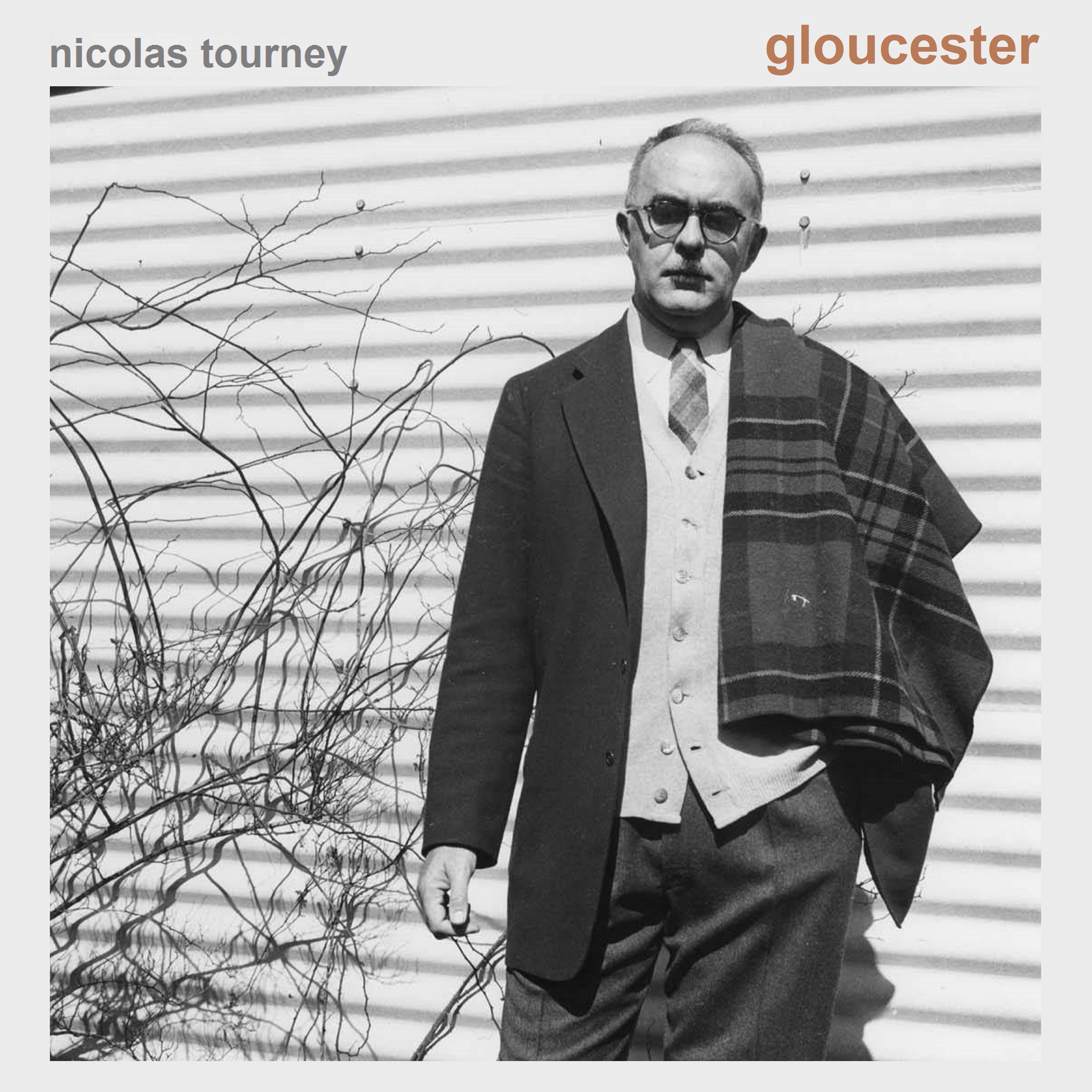
Nicolas Tourney is a french experimental musician and sound designer, also owner of the label Snow in Water Records. His new album Gloucester consists in 23 experimental compostions based on a precise methodology, gear and sound material.

As the artist says himself “For Gloucester, the device used brings together a 1/8 violin, a viola, a pure data processor and a ring modulator.
It is a work of sound evocations around Charles Olson’s Maximus Poems. I use a projectivist method, freely inspired by the theoretical work of the American poet. In the field of possibilities thus opened, this research allows spatialization in a neutral listening space.
This work was developed during a stay at the Performing Arts Forum, a kind of European Black Mountain College.”

Button: by-nc-sa
posted 19 October 2020

Janne Nummela – Preserve Energy Because the Struggle is Long

Janne Nummela – Preserve Energy Because the Struggle is Long
[mhrk256]

Janne Nummela

“Preserve Energy Because the Struggle is Long”

IT HAS SOMETHING TO DO WITH GRASPING THE DIVISION OF LABOUR BETWEEN MAN AND MACHINE

“There are obviously various musical directions and techniques going on in this album. A variety of sound sources and instruments are introduced. Abandoning specialization and sliding towards universality produces thriving musical diversity but also easily ends up to the dilettantism, which I have not been that much afraid of.

How many instruments I really played on this album? The answer is unambiguous. I am a guitarist, so I play guitar (on tracks 1, 2 and 10). Track 8 is played on the guitar, but the sound source is a virtual instrument violin (Embertone’s Joshua Bell violin by guitar to MIDI, no Max/MSP involved). Playing gestures of violin (sampled) and guitar (played by me) are entirely different in nature. So what is the point of playing violin by the guitar? Just to have fun.

Button: by-nc
posted 12 October 2020