about

Since 2010, many netlabels and artists publish their new free music releases on the clongclongmoo website. Free means that you don't have to pay anything or register to download music. However, you can usually pay something to support the artists. Please note the licenses under which the music is published. This is important to know what you are allowed to do with the music. Please visit the labels' homepages to get the free music. Most files are published under a creative commons licence. At netlabellist you will find an extensive list of websites that also offer (or have offered) free music. If you run a netlabel yourself or offer your music for free and want to draw attention to it, you are welcome to use the submission form. And remember that clongclongmoo is not there to do business, because “Business Is Not My Music.”

update, February 1st, 2026

Dear friends and followers of clongclongmoo. It's great to have you here. As you may have noticed, the site has changed a bit. Some people wanted to be able to access the music with fewer clicks. That should work again now. Here's a quick note to everyone who uses relatively new platforms such as Mirlo, Faircamp, or Coop: feel free to use the submit form to draw attention to your new music. I'd especially appreciate hearing from anyone who runs a netlabel with free Creative Commons music. Thank you! Konrad from clongclongmoo

music in category: by-nc-nd

This license is the most restrictive of our six main licenses, only allowing others to download your works and share them with others as long as they credit you, but they can’t change them in any way or use them commercially.

https://creativecommons.org/use-remix/cc-licenses/ (CC BY)

Richard Scott – Eight Studies for Copulating Blippoo Boxes

Richard Scott

“Eight Studies for Copulating Blippoo Boxes”
These eight studies (for they are not exactly compositions) are derived from the work of my friend Rob Hordijk, the electronics luthier who created the Blippoo Box, a small desktop analogue synthesiser which he described as “circuit-bent by design.” The Blippoo is a strikingly original self-modulating, generative, algorithmic device comprised of an array of two oscillators, a resonant filter, a sample and hold generator and a pair of bit shift registers. Rob named this arrangement of cross-communicating shift registers, the Rungler. The interconnection and recycling of the shift registers own data creates rudimentary pattern-like figures which can be used as modulation sources. These boxes are also, in a limited way, playable and patchable modular synthesisers but in these pieces, the instruments are not really “played” as such, but instead are largely self-playing. I have tried to keep myself out of the way as far as possible; as the great Serge Tcherepnin once put it; to allow the machines to speak for themselves. I believe that what the Blippoos have to offer, as well as being a very special kind of audible liquid mathematics, is also in and of itself a musically interesting listening experience.

The consistent patch-programming principle I have employed here is that of parallel cross-modulation. Each machine modulates itself, while also sending control voltages to the other while receiving control voltage signals from the other. For example, if the VCO 1 of Blippoo A is controlled by the sample and hold circuit of Blippoo B, then VCO 1 of Blippoo B will be controlled by the sample and hold of Blippoo A, and so on. So the two Blippoos influence each other in dialogic and recursively iterative ways that are impossible to calculate or predict. Because the changing patterns of the shift registers operate as a primitive form of memory, the Blippoo, in a sense, samples/remembers some of the data derived from what it has previously played and it directly draws upon that data to create subsequent events. But as this data is dynamic, the same settings on one day, or one moment, will not necessary produce the same or even similar results to the next, and the patterns and points of variation and bifurcation will vary, sometimes hugely. This programmed unpredictability is further exacerbated here, by the strategy that the settings and patching regimes are always exactly mirrored on each side – or as near exactly as analogue potentiometers and non-linearities will allow.

I made some more composerly, or at least performative, interventions in these eight studies too, especially to create beginnings and endings, occasionally adjusting a setting to preserve a degree of precision and equality between the voices; and most dramatically, occasionally switching between the two available sample and hold modes – essentially, whether the triangle wave oscillators are used as inputs sample and hold as on the original Blippoo design, or whether the shift registers are used instead; the “Benjolin”-mode – as derived from the implementation of the Rungler in Rob’s open-source DIY design. I also occasionally nudged a Rungler here and there to move things along if the machines seemed stuck. And of course, I recorded and selected the material that I found most interesting and I made some minor edits to the resultant recordings. But I refrained from the kind of gestural and interactive activity and editing which marks most of my other recordings and performances. I stress, and perhaps I risk over-stressing all this, both for the sake of transparency and also to encourage the listener to remember that while the content is curated, it is not performed, what we hear is rather the algorithms expressed through the analogue circuitry itself, as Rob Hordijk imagined and realised it.

There are many other possibilities which could be explored: for more freely assigned non-parallel and non-mirrored patching, for gestural performance, or using the Blippoos to control, or be controlled by, other voltage controlled instruments, not least Rob’s own Hordijk Modular system. Experiments with four Blippoo boxes, for example, also created some quite different results – but that is a project for another day – we have more that enough rungling to be going on with. So I have preferred to stay faithful to the original simple concept: which is to document and to present to the listener the pure dialogic interaction between two identical machines with identical settings interacting with each other in what I hope are transparent, readable, and surprising, ways.

These studies, it goes without saying, are dedicated to the memory of Rob Hordijk, whose life’s work in electronic design has had a profound and continuing influence on that of my own and many others. Life is fragile, and in 2022, at the height of his creative powers, Rob’s life was cut short by a cruel and remorseless illness which devastated his quality of life and which he was ultimately unable to resist. Those of us who were close to him will surely continue to miss his intelligence, his wit, his deep sense of history and science, his love of restaurants and his technical and musical insights deeply, and will remain inspired by his work into the future.

***

Missing the vowels? Add 9*a, 8*e, 9*i, 7*o, 3*u, 3*y.

OK, OK, here are the stripped vowels in the correct order: eeoee ui ao aii oi ueoiyiay eeaayoueaiao aiaio

Button: by-nc-nd
posted 05 July 2024

Luis Antero & Toni Dimitrov – 𝘮​𝘦​𝘮​𝘰​𝘳​𝘺

Luis Antero & Toni Dimitrov – 𝘮​𝘦​𝘮​𝘰​𝘳​𝘺
[mi316]

Luis Antero & Toni Dimitrov

“𝘮​𝘦​𝘮​𝘰​𝘳​𝘺”

𝘮𝘦𝘮𝘰𝘳𝘺 is a hauntingly beautiful soundscape album that transports listeners to a world of eerie landscapes and forgotten memories.

Composed of two meticulously crafted tracks, the album weaves together a tapestry of whispers, creaks, and distant howls to create a sense of sonic unease.

From the hauntingly melodic parts to the atmospheric field recordings, each track is a masterclass in sonic storytelling, conjuring images of abandoned cities, haunted forests, and desolate landscapes.

𝘮𝘦𝘮𝘰𝘳𝘺 is a soundscape album that is a carefully crafted tapestry of textures, tones, and rhythms, designed to transport listeners to a world of mystery and contemplation. It is an immersive and unsettling journey that will leave you questioning the boundaries between reality and the unknown.

Button: by-nc-nd
posted 04 July 2024

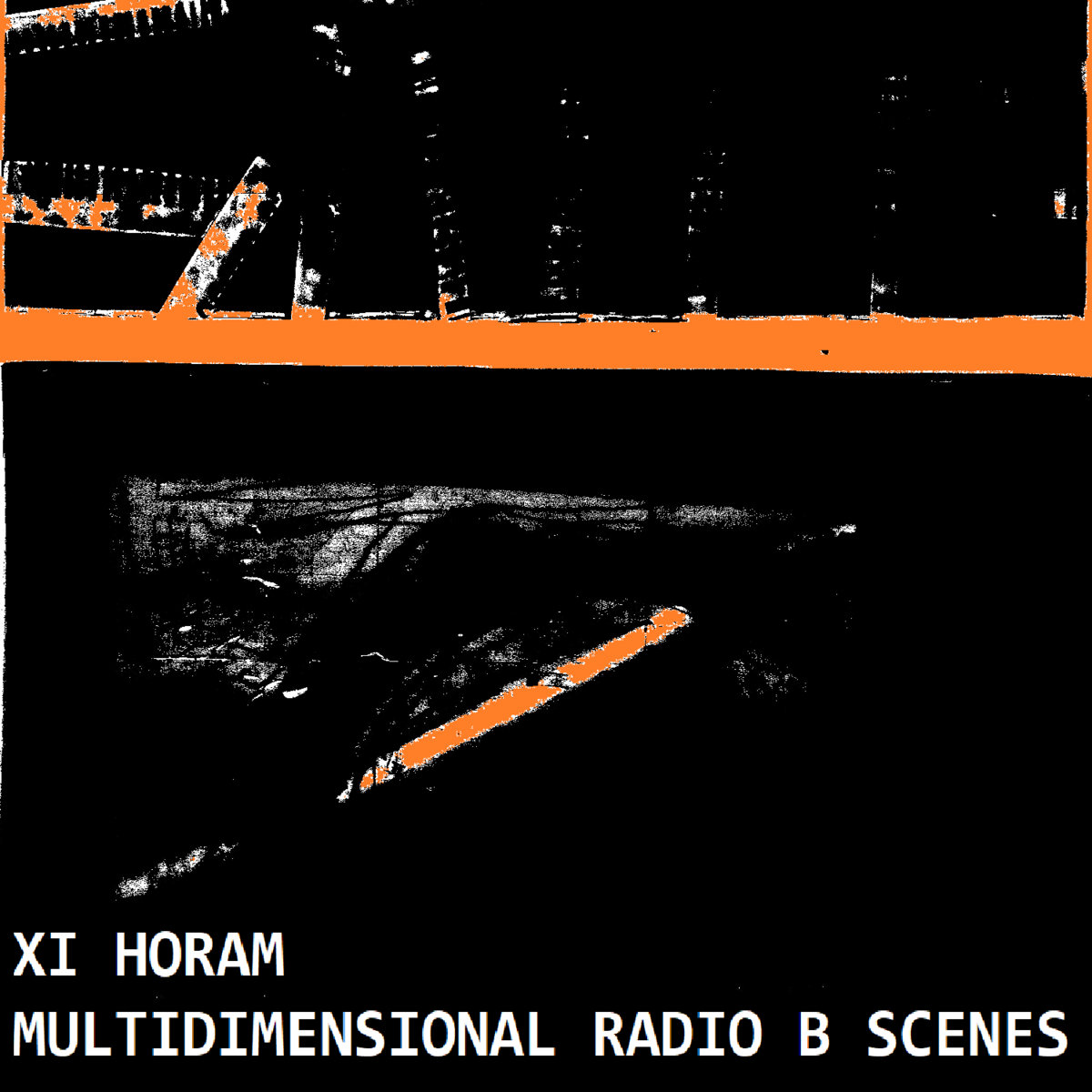
Xi Horam – Multidimensional Radio B Scenes

Xi Horam – Multidimensional Radio B Scenes
[Pertin-nce 102]

Xi Horam

“Multidimensional Radio B Scenes”

This album is a compilation of XI Horam’s compositions that previously aired on his monthly show ”Excursion” on Montreal web radio lafaceb.live

XI Horam:
xihorammusic.bandcamp.com

facebook:
www.facebook.com/p/XI-Horam-100069865437170/?_rdr

more music at:
www.pertin-nce.ca
www.pertin-nce.bandcamp.com
www.the-end-is-near.bandcamp.com
www.mixcloud.com/pertin
www.facebook.com/pertinnce
www.facebook.com/then2014
@pertin-nce
archive.org/details/@bleupulp
hearthis.at/maxime-tanguay-4x/
www.pertin-nce.blogspot.com
variousanduneasy.blogspot.com
www.lafaceb.live

Button: by-nc-nd
posted 28 June 2024

Various Artists – THE BEST of The Feel of DEFIL

Various Artists – THE BEST of The Feel of DEFIL

ws-gesamt”>

[BM03R24]

Various Artists

“THE BEST of The Feel of DEFIL”

Celebrating X Anniversary of The Feel of DEFIL project, Bonimedia netlabel proudly presents THE BEST of THE FEEL OF DEFIL by Various Artists. This is the first step to celebrate 10 years of “The Feel of DEFIL” project – tribute to the instruments produced in “Dolnośląska Fabryka Instrumentów Lutniczych w Lubinie” (1947-2001). TFOD project was invented by Emil Bonifaczuk from Bonimedia netlabel in 2014. “The best of” compilation contains selected tracks submitted to TFOD project in 2014-2024. Enjoy!
Button: by-nc-nd