about

Since 2010, many netlabels and artists publish their new free music releases on the clongclongmoo website. Free means that you don't have to pay anything or register to download music. However, you can usually pay something to support the artists. Please note the licenses under which the music is published. This is important to know what you are allowed to do with the music. Please visit the labels' homepages to get the free music. Most files are published under a creative commons licence. At netlabellist you will find an extensive list of websites that also offer (or have offered) free music. If you run a netlabel yourself or offer your music for free and want to draw attention to it, you are welcome to use the submission form. And remember that clongclongmoo is not there to do business, because “Business Is Not My Music.”

music tagged with: contemporary

Tiago Morais Morgado – A Study On Audio Segmentation Of Gruppen (An Hommage To Karlheinz Stockhausen)

Tiago Morais Morgado – A Study On Audio Segmentation Of Gruppen (An Hommage To Karlheinz Stockhausen)

Tiago Morais Morgado

“A Study On Audio Segmentation Of Gruppen (An Hommage To Karlheinz Stockhausen)”

We are committed to promptly taking down the record upon request. Any potential donations received will be directed towards supporting charitable organizations. At the time of this record release, our focus was primarily on contributing to the Portuguese Committee of the Red Cross.In the realm of experimental music and avant-garde exploration, few figures have left an indelible mark as profound as Karlheinz Stockhausen. A maverick of sonic innovation, Stockhausen’s artistic trajectory defies convention and catapults listeners into uncharted dimensions of sound. Rooted in the avant-garde movement, his compositions stand as celestial tapestries woven from the fabric of imagination and technology. Emerging during the post-war era, Stockhausen’s musical pilgrimage paralleled the burgeoning interest in the convergence of art, science, and technology. His compositions can be likened to sonic laboratories, each piece a chemical reaction between timbre, structure, and the human experience. He can be considered a “sonic alchemist,” a term that succinctly encapsulates his ability to transform sound into something simultaneously otherworldly and deeply human. At the heart of Stockhausen’s creative odyssey lies a ceaseless curiosity. His audacious forays into electronic music propelled him into the vanguard of the genre, challenging the limits of what was previously considered possible. His music captures this essence eloquently, describing his work as a “revelation of the cosmos in a sequencer.” Indeed, Stockhausen’s compositions often evoke a sense of cosmic vastness, as if listeners are traversing the astral plane while being enveloped by the intricate pulsations of sound. One cannot discuss Stockhausen without delving into his magnum opus, “Kontakte.” His interpretation of this composition as a “collision of particles in a subatomic space” vividly portrays its essence. “Kontakte” epitomizes Stockhausen’s fascination with juxtaposing disparate sonic elements, often analogized to colliding atoms. The piece melds electronic and acoustic timbres, creating an immersive experience that feels both terrestrial and extraterrestrial. Stockhausen’s approach to live performance is equally emblematic of his avant-garde spirit. His poetically likens his live shows to “rituals of the electronic age,” where audiences are participants in a transcendent ceremony. His performances, often featuring tape manipulation, spatialization, and pioneering electronic instruments, offer an ever-evolving voyage through sonic dimensions. The influence of Stockhausen’s radicalism extends beyond his compositions. His pedagogical contributions have birthed generations of artists who embrace his spirit of innovation. His lauds his teaching methodology as a “sonic séance,” where students commune with the very essence of sound. Through this approach, Stockhausen imparts not just technical prowess, but a holistic understanding of the philosophical underpinnings that elevate music to an art form of boundless possibilities. In the contemporary musical landscape, Stockhausen’s legacy continues to resonate. Artists spanning genres, from ambient to techno, draw inspiration from his audacious explorations. His’s portrayal of Stockhausen as an “eternal voyager in the universe of frequencies” captures his timelessness—a visionary whose work remains as vital today as it was during its inception. In the annals of experimental music, Karlheinz Stockhausen stands as a monolithic figure—a prophet of sound who shattered the confines of convention. His Magazine’s portrayal of him as a “luminary of the avant-garde” is a fitting tribute to his enduring impact. As we navigate an age where technology enables previously unfathomable sonic realms, Stockhausen’s legacy serves as a guiding light, urging us to venture fearlessly into the unknown and reshape the very fabric of sound itself.

In the ever-shifting landscape of modern music, certain compositions stand as pillars of innovation—monuments that challenge preconceived notions and push the boundaries of sonic possibility. Karlheinz Stockhausen’s “Gruppen” is one such opus, a kaleidoscopic journey through sound that redefines the very essence of musical composition. As we embark on this auditory adventure, we find ourselves immersed in a realm where convention is shattered, and new dimensions of expression emerge. “Gruppen” is often described as a triptych for three orchestras, a term that merely scratches the surface of its complexity. The avant-garde masterpiece is a triumph of orchestration, structure, and spatial manipulation—an exploration of sound that His Magazine aptly terms an “aural labyrinth.” Stockhausen, the sonic architect, constructs a sonic tapestry that stretches the limits of traditional orchestral composition, interweaving textures and timbres in a manner that transports listeners beyond the realm of ordinary perception. The opening bars of “Gruppen” are a gateway into Stockhausen’s universe. His’s analogy of “aural topography” couldn’t be more apt, as the music unfolds like a sonic landscape that shifts and morphs with each passing moment. The three orchestras, positioned around the audience, create an immersive experience where sound becomes a three-dimensional entity. Listeners are enveloped by waves of sound that cascade from all directions, transcending the linear confines of traditional musical presentation. Stockhausen’s meticulous attention to timbral exploration is a hallmark of “Gruppen.” His describes his approach as “alchemy in sound,” where conventional orchestral instruments are transformed into vessels of sonic experimentation. The composer’s manipulation of timbre is akin to a sonic microscope, revealing the hidden intricacies and subtleties of sound that often remain obscured in more conventional compositions. “Gruppen” is not merely a composition; it is a journey of exploration and discovery. His’s portrayal of it as a “sonic expedition” captures the essence of the experience. Stockhausen’s use of spatialization is pivotal in this regard. As sound moves through space, listeners are led on a voyage, each twist and turn of the orchestral interplay guiding them through a narrative that transcends traditional storytelling. In a musical era defined by cross-pollination and genre-blurring, “Gruppen” remains an emblem of audacious experimentation. His’s description of it as a “portal to the future” resonates profoundly. Stockhausen’s masterpiece challenges us to shed our preconceptions and venture into uncharted territories of sound. In doing so, we not only engage with the past but also lay the groundwork for the sonic explorations of generations to come. As we navigate the labyrinthine passages of Stockhausen’s “Gruppen,” we become adventurers in a realm where boundaries dissolve and sonic frontiers expand. His’s portrayal of it as a “sonic odyssey” captures the essence of the experience—an odyssey that invites us to reimagine the possibilities of music and traverse the uncharted realms of avant-garde expression. In the legacy of “Gruppen,” we find an invitation to journey beyond the known, to embrace the chaotic beauty of the avant-garde, and to engage in a perpetual exploration of modern music’s limitless potential.

In the dynamic realm of modern music, where boundaries are continually redrawn and conventions are left in the dust, few artists embody the spirit of sonic exploration as fervently as Tiago Morais Morgado. A true visionary of soundscapes, Morgado’s compositions are a tapestry woven with threads of innovation, pushing the very limits of auditory perception. As we delve into the sonic cosmos he creates, we find ourselves embarking on a journey that His Magazine aptly coins an “aural expedition.” Morgado’s music is a universe unto itself—a place where genres merge, textures collide, and sonic frontiers expand. His’s description of his work as “auditory architecture” resonates profoundly, for each composition is a sonic edifice constructed with meticulous detail. His approach to composition can be likened to that of an architect, crafting sonic spaces that envelop the listener and challenge them to navigate uncharted sonic dimensions. An exploration of Morgado’s sonic palette reveals a fascination with juxtaposing the organic and the electronic. His’s analogy of his compositions as “sonic collisions” captures the essence of this interplay. Organic instruments merge with electronic manipulations in a symphony of contrasts, each element both complementing and challenging the other. The result is a multi-layered sonic tapestry that defies categorization—a testament to Morgado’s refusal to confine his music within traditional boundaries. In the heart of Morgado’s sonic creations lies a commitment to pushing the limits of technology as a tool for artistic expression. His’s depiction of his work as “algorithmic dreams” mirrors his affinity for computational methods. Morgado employs algorithms as creative partners, allowing them to influence the composition process. The result is a marriage of human intuition and machine logic, producing music that is at once familiar and otherworldly. Morgado’s work transcends the auditory realm and extends into the visual. His’s description of his compositions as “audiovisual landscapes” captures the synesthetic quality of his creations. Collaborations with visual artists and incorporation of visual elements into live performances highlight his desire to create immersive multi-sensory experiences. In Morgado’s world, sound and sight are intertwined, blurring the lines between artistic mediums. In an era defined by genre fluidity and cross-disciplinary collaboration, Tiago Morais Morgado stands as a luminary of sonic innovation. His’s portrayal of him as a “sonic cartographer” is emblematic of his role in charting unexplored musical territories. Morgado’s compositions beckon us to abandon preconceived notions and traverse a sonic landscape where convention is obsolete, and exploration is paramount. As we venture into the auditory cosmos sculpted by Tiago Morais Morgado, we become participants in an ongoing sonic narrative—an avant-garde saga that defies containment. His’s description of his music as an “aural expedition” resonates deeply, for every composition invites us to embark on a journey of sonic discovery. In the legacy of Morgado, we find an invitation to embrace the unknown, celebrate innovation, and participate in the perpetual evolution of modern music’s expressive potential.

In the intricate tapestry of modern music, Nachtstuck Records emerges as a pioneer of sonic exploration. As a torchbearer of the avant-garde, this label embarks on sonic journeys that challenge conventions and beckon listeners to traverse uncharted soundscapes. Nachtstuck Records thrives on defying categorization, much like the ever-fluid nature of modern music. The label’s artists dismantle established norms, constructing compositions that are immersive experiences rather than mere songs. By pushing the boundaries of traditional structures, Nachtstuck Records allows listeners to tap into the transformative power of sound. One of the most remarkable aspects of Nachtstuck Records is its commitment to cross-disciplinary collaboration. The label provides a canvas where musicians, visual artists, and performers converge, fostering an environment where diverse artistic expressions intertwine. This approach aligns with the contemporary artistic ethos that embraces the symbiosis between various art forms. Nachtstuck Records stands as a testament to the boundless potential of sound. Its releases transcend the ordinary, inviting listeners to venture into the unknown. The label champions the beauty found within unpredictability and unconventional methods, capturing the very essence of modern music’s spirit of experimentation. Amidst an era that celebrates innovation, Nachtstuck Records shines as a guiding light into unexplored sonic territories. As they continue to champion the unconventional, they contribute to the evolution of modern music. The label encapsulates the heart of avant-garde exploration—an unwavering commitment to forging new sonic horizons that defy conventions and redefine the very essence of sound.

Button: by-nc-nd
posted 04 January 2024

Studio 112 – L’ Exploration Des Vertiges Vol. 2

Studio 112 – L’ Exploration Des Vertiges Vol. 2
[LCNLP183]

Studio 112

“L’ Exploration Des Vertiges Vol. 2”

The necrophile hummingbird netlabel present L’Exploration Des Vertiges
Vol. 2 by Studio112.

“Pataphysical Music for Space Dada”

The future where we live is a bad joke.

Studio112 is the main project of Alain Grille also electric guitarist and musicmaker in Multiple Personality 3 / PIRATE Tapes / EVA Vertigo / TKno BeurK / REfugEEs From Beyond / Invisible Illusion / MK-Ultra

Button: by-nc-sa
posted 21 December 2023

Studio 112 – L’ Exploration Des Vertiges Vol. 1

Studio 112 – L' Exploration Des Vertiges Vol. 1
[LCNLP184]

Studio 112

“L’ Exploration Des Vertiges Vol. 1”

The necrophile hummingbird netlabel present L’Exploration Des Vertiges
Vol. 1 by Studio112.

“Pataphysical Music for Space Dadaphile”

The future where we live is a bad joke.

Studio112 is the main project of Alain Grille also electric guitarist and musicmaker in Multiple Personality 3 / PIRATE Tapes / EVA Vertigo / TKno BeurK / REfugEEs From Beyond / Invisible Illusion / MK-Ultra

Button: by-nc-sa
posted 18 December 2023

Sigil of Time & Mirocaw – COVERED WITH MOSS trilogy

Sigil of Time & Mirocaw – COVERED WITH MOSS trilogy
[zen279]

Sigil of Time & Mirocaw

“COVERED WITH MOSS trilogy”

A theme in three variations: from dark ambient, via a subtle hint of psychedelic, to a more minimalistic neoclassical theme. It kind of showcases the evolution of ambient music from classical minimalism and use of ambient noise to a more post industrial sound.

Button: by-nc-sa
posted 17 November 2023

ardleg – …

ardleg – …
[LCNLP178]

ardleg

“…”

The Necrophile Hummingbird presents … by ardleg

“Standby Music for Post Millenarians”

Will this collection of miniatures end up as telephone ringtones or data to feed Artificial inteIligences ?
This new record, prophetic in more than one way, seems to announce the end of transmissions. The particularity of a musical continuum is that through the force of repetition we imagine that it will always be there. But the best things must come to an end. Or rather the ending makes them better. Is the end always the beginning? Is this just a break? Who knows if there will be one after 2023 for this netlabel ? In theory yes, but… what characterizes the Necrophile Hummingbird is that it is a singularity, which should never have existed and which from the first moment threatened to disappear. And this every day for years.

With synthesizers and samplers, next with computer-assisted music, technology has had a Promethean role in liberating music from the old narrow shackles that Edgar Varese already denounced. Today in music and video the disruption of AI has almost the opposite effect for the moment, because what was offered to everyone thanks to freeware, is now only accessible in the form of a paid subscription. Which is paradoxical to say the least given that these companies do not have to pay to draw on the internet the works necessary for deep learning. And given the resources that the operation of an AI requires, there is little chance that free solutions will appear before the diffusion of quantum computers. In an increasingly unequal world, whoever lives will see, whoever hacks will survive.

Contact : semen-s-club”at”laposte.net
(Artwork also by ardleg)

Button: by-nc-sa
posted 15 November 2023


Miquel Parera & Gonzorobot – The Dreams of the Beetle that eats Cactus.

Miquel Parera & Gonzorobot – The Dreams of the Beetle that eats Cactus.

Miquel Parera & Gonzorobot

“The Dreams of the Beetle that eats Cactus.”

Nature’s Cachitos Album

Title: The Dreams of the Beetle that eats Cactus.
Date: 06-2023
Composers: Gonzorobot & Miquel Parera.
ID: NC-Beetle.

The music is programmed with semi-random algorithms
that the uPIGr-CM editor transforms into a musical
notation language so that it can be translated into
MIDI, audio and musical score.

The programmer (Miquel Parera) represents humanity
and the interpretation system (Gonzorobot)
represents the algorithm.

The result of the collaboration between the two is
music.

Youtube: www.youtube.com/@naturescachitos9685/videos

Track 1: Dream 1 – I was drinking coffee in a well.
ID: NC-Beetle-1-y2023m6d18h21m47s32
Time: 04:26

Track 2: Dream 2 – The cicadas speak to me in 25 languages.
ID: NC-Beetle-2-y2023m6d18h22m14s40
Time: 05:45

Track 3: Dream 3 – We have recovered the sacred book of the beetles.
ID: NC-Beetle-3-y2023m6d19h21m27s4
Time: 01:29

Track 4: Dream 4 – Apples are as good as human pies.
ID: NC-Beetle-4-y2023m6d21h13m27s41
Time: 03:28

Track 5: Dream 5 – When I came out of the hole, it was raining wine.
ID: NC-Beetle-4-y2023m6d21h19m20s42
Time: 00:44

Track 6: Dream 6 – All my friends are purple.
ID: NC-Beetle-3-y2023m6d22h9m20s38
Time: 01:41

Track 7: Dream 7 – I’m being chased by a human with a camera.
ID: NC-Beetle-2-y2023m6d22h9m31s34
Time: 01:34

Track 8: Dream 8 – There are beetles on the Moon.
ID: NC-Beetle-1-y2023m6d23h11m59s42
Time: 03:15

Instrument:

uPIGr_i : Sampled piano + vibraphone
Programmed on uPIGr CM editor.

gonzorobot.com

If you are two friends who play the piano and the vibraphone and you are skilled enough to read a score written by a two year old artificial intelligence and a talentless human here it is:

ia902604.us.archive.org/11/items/the-dreams-of-the-beetle-that-eats-cactus./NC-Beetle-1.pdf

#minimalism #repetitive #algorithmic #music #computermusic #piano #vibraphone

License: CC-BY 4.0
creativecommons.org/licenses/by/4.0/

Button: by-nc-sa
posted 26 June 2023

Pedro Linde – Piano álbum

Pedro Linde – Piano álbum
[Fortín 13]

Pedro Linde

“Piano álbum”

Fortín artesonoro 2023

| Fortín 13 |

PEDRO LINDE
PIANO ÁLBUM

‘Piano álbum’ es el nombre genérico de una colección de 7 piezas para piano digital sometido a diferentes procesos de edición. Las piezas son:

Allegro cromático (4:18)
Diatriba (4:29)
En camino (3:46)
Oír llover I (6:09)
Iluminaciones I (6:01)
Oír llover II (7:36)
Iluminaciones II (10:48)

Todas ellas suman una duración total de 41:87

Todos los derechos reservados.

Publicado el 18 de marzo de 2023

all rights reserved
posted 19 March 2023

Reeder – It Is The Nature Of Dreams To End (Anniversary Remaster)

Reeder – It Is The Nature Of Dreams To End (Anniversary Remaster)

Reeder

“It Is The Nature Of Dreams To End (Anniversary Remaster)”

Notes On The Artwork:

As you’ll read below, the original name and artwork of this album came at a pessimistic time of my life. Five years later, I decided that the whale deserves another chance to fly.

~~

A Letter From The Composer:

After a decade of making music I didn’t think I’d write another album after this one. At least, not publicly.

In 2017 I was kinda miserable. It was my first year as a full time teacher, which was a source of an incredible amount of stress. I was living on my own for the first time, making just enough to pay rent and my bills, in a tiny little apartment I have since come to refer to as “the shoe box”.

The thing with teaching is that it largely obliterates your spare time, if you let it – and gosh was I letting it. I didn’t foresee a future where I could continue doing that work and also have music as a quasi-professional pursuit on the side. There simply wasn’t enough time.

To quote a certain supernatural whale in a video game…

So I went about figuring out what an album would look like. I’d only written one in the past – a daft little thing called Wednesday I wrote when I was an even more miserable university student who’d just discovered brickwall limiting and was listening to too much Ben Folds. I thought if I was going to stop I should at least stop on my own terms and put a capstone on the whole thing. I reinterpreted and renamed some older pieces (Time, Relic, Home, Owl Temple, Theme For A Friend) and wrote some new ones (Farewell, Castle Gate) and also for good measure snuck in that one piece of mine that had actually got any traction. We all know the one and why. I packaged it all up with a collage of public domain images, put it out into the universe, and stepped back satisfied that it was over.

That didn’t work out, did it?

2022 marks a decade of being Reeder, and five years since this record, so I thought I’d finally get around to mastering it. I kinda skipped that part the first time around because I didn’t really think anybody would listen and people mystify the mastering process so much that I thought I wouldn’t be able to do it justice. Now, with five more years of production experience behind me, I finally feel confident enough to go back in and finish Dreams.

I am unfathomably grateful that this music has reached the number of people that it has, and continues to. I’m thrilled that it has found people’s hearts the way I had only dreamed it would. That this only happened because of a wild stroke of luck and one person with a large audience is not beyond me.

Thank you to everybody who listened, and a special thank you to everybody who hung around. I can’t wait to see what I’m gonna make in the next decade. I hope it’s good.

– Reeder, Feb 6 2022
credits
released March 18, 2022

Artwork by Alice Jooren – alicejooren.nl.

All pieces composed or improvised by Reeder.
Engineering by Reeder.

If you enjoy this music please consider sharing it.

Button: by-nc-nd
posted 18 April 2022

The Maravines – Nylon Covers

The Maravines – Nylon Covers
[MARAV056M]

The Maravines

“Nylon Covers”

The six song album has songs from Fairmont, Tri-State, Sink Tapes, Alice in Chains, and the Beach Boys. The second song “Hawk in the Fog” debuted on the online radio station BlowUpRadio on March 21st, and the host says that the Maravines’ version is “very different from the original of that song, but I rather love that, and I love, love, love the original.” The length of Nylon Covers is 22 minutes and 14 seconds.
Button: zero
posted 22 March 2022

Minc – Pulse

Minc – Pulse
[A030]

Minc

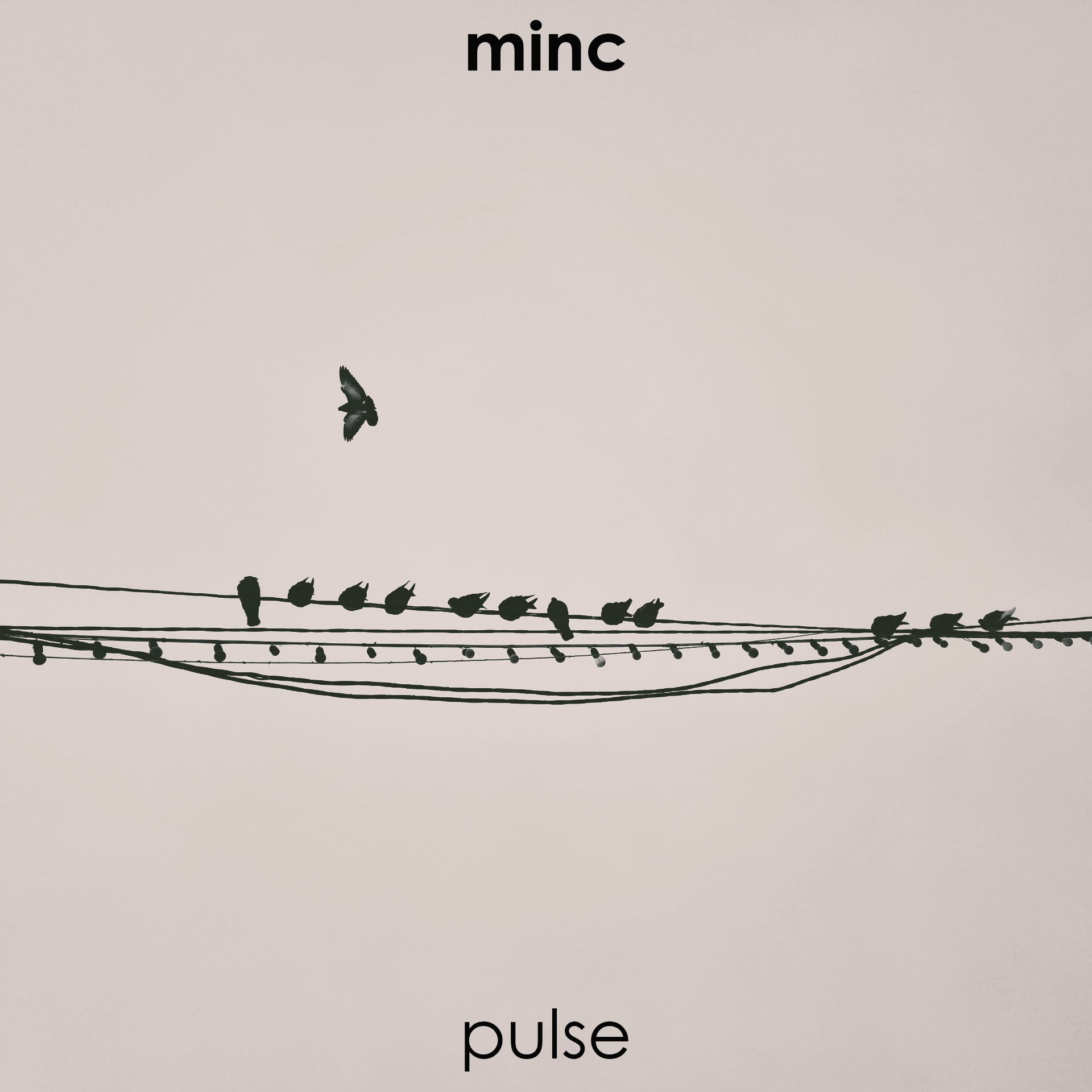
“Pulse”

Minimalism | Pattern Music | Modern Composition | Algorithmic Composition

The new work of the Minc project contains single lengthty composition, in which pattern notes evenly fill each bar, that creates the effect of a constant “pulse”. Chromatic percussion, bassoon, piano, deep bass, cello and viola are involved. The composition is fully generated automatically.

Composed And Recorded 26 Feb 2022
Composed By dmbac
Mixed By Ilya Grudina

Button: no
posted 03 March 2022

Udiv – Trivia

Udiv – Trivia
[A027]

Udiv

“Trivia”

Minimalism | Pattern Music | Automatic Composition | Modern Composition

The 1st Album of Udiv project introduces a new automatic composition algorithm. Throughout the lengthy track we can hear a gradual transition from single-note patterns to standard ones, consisting of six notes within the given pentatonic row. In addition to the usual instrumentation for Djezmusic projects (such as chromatic percussion, piano, bass, bassoon, guitar), the cello and viola are used for the first time.

Composed and Recorded 30 Jan 2022
Composed by dmbac
Mixed by Ilya Grudina

Button: by-nd
posted 07 February 2022

Minc – Span

Minc – Span
[A022]

Minc

“Span”

Composed and recorded 07 Jan 2022
Composed by dmbac
Mixed by Ilya Grudina

4th album of Minc consists of one 32-minute composition, generated automatically for 14 musical instruments including woodwinds, chromatic percussion (assorted mallets, vibraphone etc), pianos, drums and basses. Album cover photo was taken in Sao-Paulo.

Button: by-nd
posted 19 January 2022

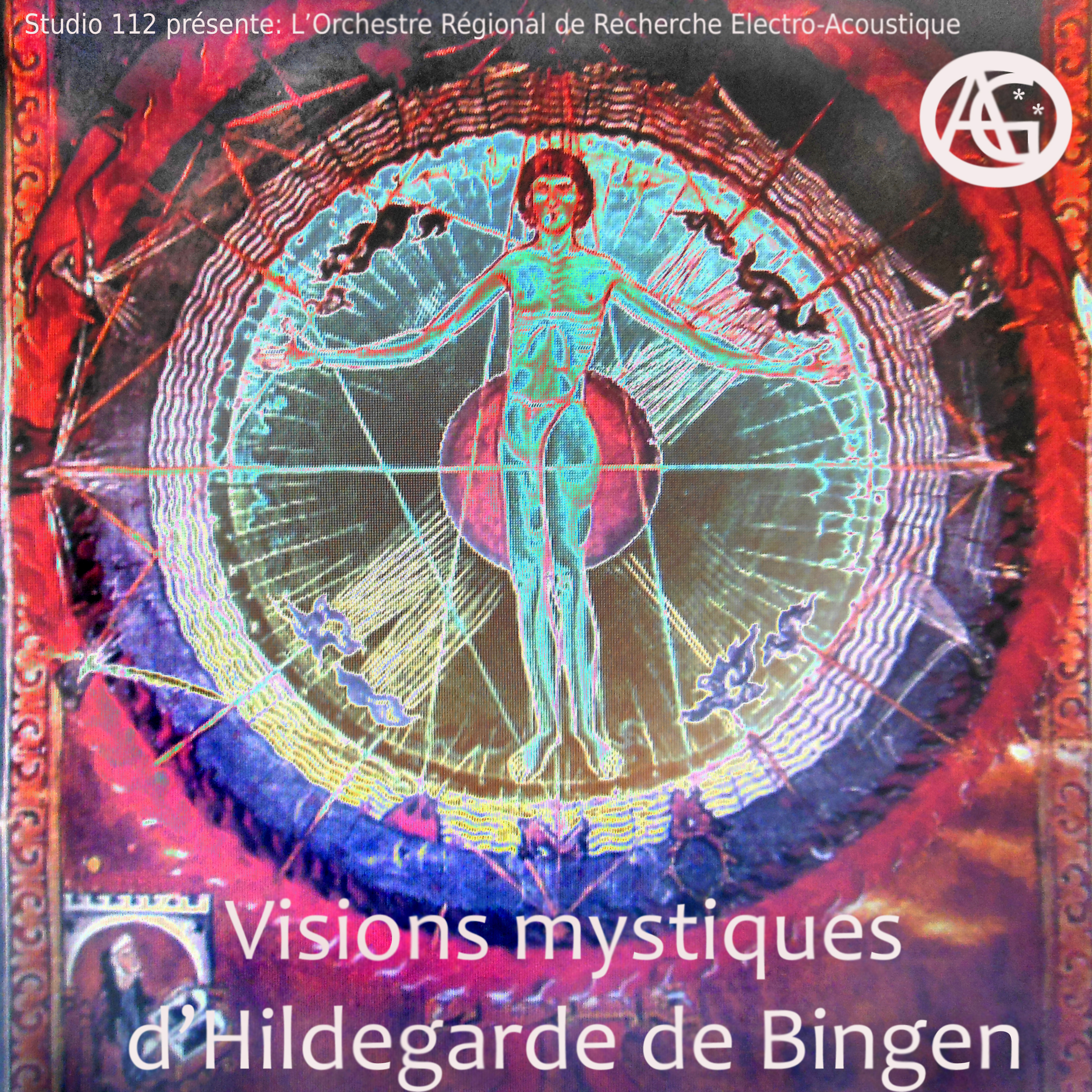
Studio 112 – Visions Mystiques D’Hildegarde De Bingen

Studio 112 – Visions Mystiques D'Hildegarde De Bingen
[LCNLP136]

Studio 112

“Visions Mystiques D’Hildegarde De Bingen”

The Necrophile Hummingbird netlabel presents Christmas on Titan by Studio 112.
“Mystical Music for Mysterious People”.
A kind of out of time symphony, as the title told it’s a very synaesthetic music blooming Hildegard Von Bingen visions front of your eyes.
More about her on wikipedia en.wikipedia.org/wiki/Hildegard_of_Bingen

Studio112 is the main project of Alain Grille also electric guitarist and musicmaker in rADio eNd / Multiple Personality 3 / PIRATE Tapes / EVA Vertigo / TKno BeurK / MK-Ultra

Previous albums by Studio 112 in the Internet Archive
archive.org/search.php?query=creator%3A%22Studio112%22

Illustration by Alain Grille

Button: by-nc-sa
posted 20 October 2021

Materia Signata – Materia Signata

Materia Signata – Materia Signata
[SNDSPHR045]

Materia Signata

“Materia Signata”

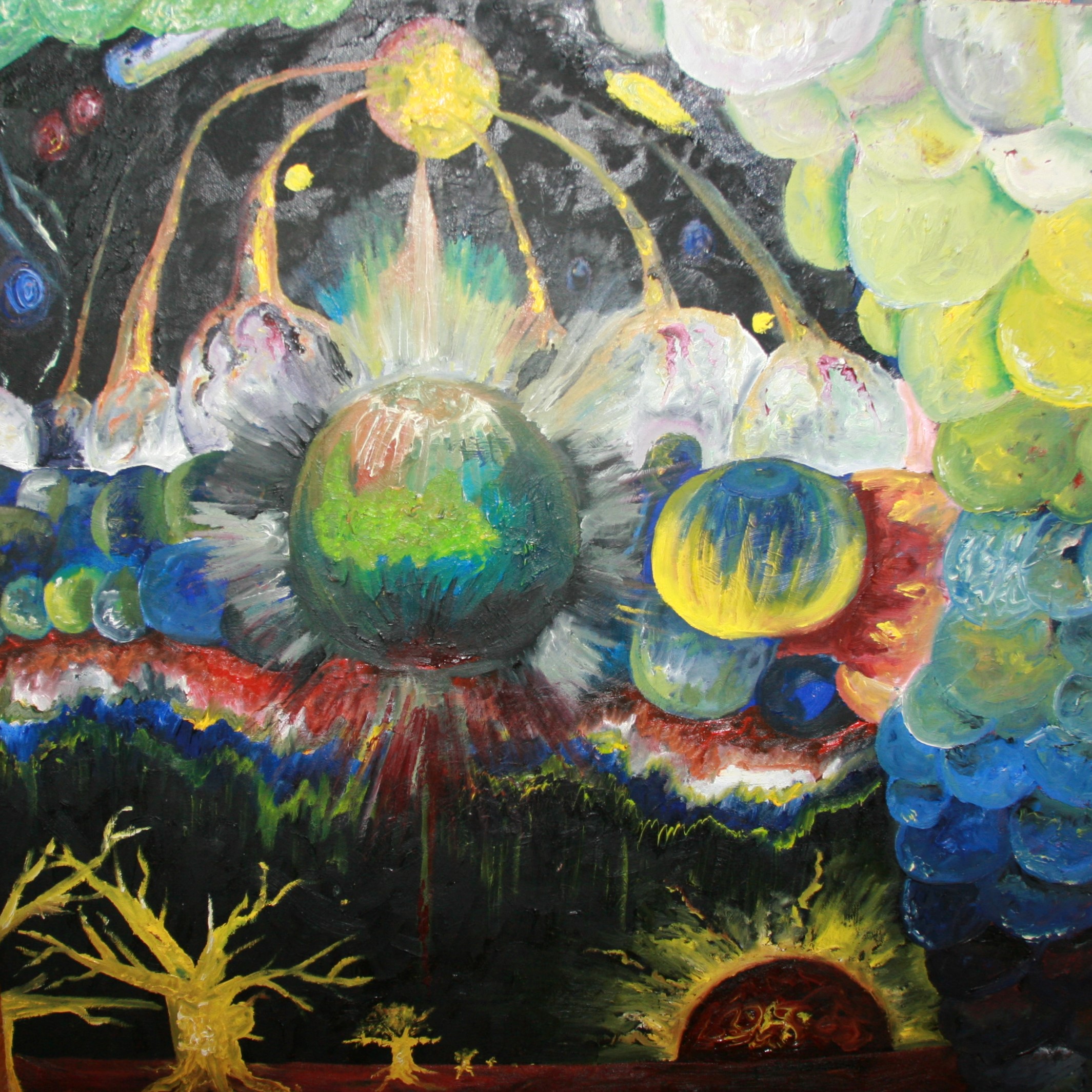
Sound is a territory suitable for exploring in company, even across the distance. A vast territory where limits can be stretched. Sound is also a way of relating to the other, a dialogue. Materia Signata is the covenant on the intangible. Materia Signata is Kivitog and In Vitro.

All music was recorded between February and July 2021 in Italy and Mexico.

Button: by-nc
posted 15 August 2021

Gustavo Becerra-Schmidt – Obra Electroacustica

Gustavo Becerra-Schmidt – Obra Electroacustica
[pn036]

Gustavo Becerra-Schmidt

“Obra Electroacustica”

(10 Years Ago)

Any review or comment about Chilean art music necessarily mentions composer Gustavo Becerra-Schmidt. This is not the case for his electronic and electroacoustic music, which seemed to be somewhat hidden or overlooked (until the uploading of his «Obra electroacústica» in 2008 by Pueblo Nuevo Netlabel), far from those who have wanted to approach this Becerra realm, where time seems to be standing still. These pieces -the ones played by machines- create a strange, disturbing sound space. Here, silence makes sound disappear, mingling with it, making it mutate. As if muted by a black hole, generating a gravity field absorbing everything around, but, because of this very quality, densifying it, making it murmur.

The release of almost all electronic works by Becerra (including mixed media, electronic, and electroacoustic pieces,) is an important and extremely necessary gesture for Chile, where the commitment for recovering immaterial heritage easily falls into oblivion. Through these works, the fortunate use of technologies around in the 70s, the 80s, and years to come, Becerra seemed to grasp the turn this kind of work would offer to compositional inventiveness as a whole: synthesizers, all kinds of artifacts and computers were used by him to generate other sounds, other forms and structures, other rhythms, weird harmonies.

As expressed by musical environment around him (in no way restricted to scores, for folklore, popular music and pieces for theater and movies were also part of his surroundings), Becerra has left a fundamental legacy, not just as a composer -being this an enormous opus. Cirilo Vila, Gabriel Brncic, and Fernando García -among many outstanding musicians in Chilean scene- were his students, which eloquently proves Becerra’s panache for teaching, even though for him the concepts of «talent» and «teaching» music (confusing matters these two), were profoundly questioned in two acclaimed papers of his: «El mito del talento en música» (1969) and «Crisis de la enseñanza de la composición en occidente» (1958-1959). In the latter, Becerra accounts for a disease that, through the years, seems to have spread out to a fair amount of composers’ brains: «Never as today there is a tiresome insistence in writing music according to a theory, i. e., to a set of mostly intellectual hypotheses. This has taken, as we said, not only to a distance between the composer and the audience, but also between himself and his work.

Juan Pablo Abalo
Compositor. Crítico musical / Composer. Music critic.
(Santiago, Chile. Julio / July 2010)

Button: by-nc-sa
posted 20 July 2021

Jose Vicente Asuar – Obra Electroacustica

Jose Vicente Asuar – Obra Electroacustica
[pncd08]

Jose Vicente Asuar

“Obra Electroacustica”

(10 Years Ago!)

We are proud, pleased and glad to present, at last, this CD release of the electroacoustic work by José Vicente Asuar.

This is a carefully crafted compilation, both a record and a symbol of a unique oeuvre coming from Chile – an aim thoroughly pursued by Comunidad Electroacústica de Chile, Pueblo Nuevo Netlabel, and Escuela de Música de la Universidad Arcis (via Laboratorio de Informática Musical) in this new joint venture.

The strange and anomalous presence of this visionary in our Arts history, fully acknowledged as a creative music pioneer both in Chile and abroad, has generated a slowly growing interest in several realms of our local culture. In order to understand this fully, checking local and foreign literature on Asuar’s releases, prizes and commissions -proof of recognition and value of his work- suffices. During the 90’s, his presence fades, as he turns away from composition, to be rescued and rediscovered by the early 2000s. Harmonic mixture of composer and engineer, Mr. Asuar researched and generated electronic sound technologies, creating with them a deeply expressive and personal music: maybe the first devices created and modified in Chile in the late 50’s; the first fully synthesized work composed in our country and/or Latin America, in 1959; the implementation of Sound Technology career at Universidad de Chile, in 1969; setting up electroacoustic music studios in Germany (1960) and Venezuela (1966), are all consequences of his pursuit, as well as the composition of works that explored sound/ music continuities and discontinuities, ranging from natural to human to synthetic materials; designing a music-making-oriented computer of his own, unique in the world at that time (1978), all landmarks of a paradigmatic local pioneer. His work presents the convergence of certain aspects of musique concrète, linked to an Art Music context, where serialism techniques, computer-assisted composition via heuristic processes, and an exquisite flair for sound synthesis, flow in a particularly free and personal way.

Nowadays, his technical and artistic work is both a direct and indirect catalyst for musicians and artists from all disciplines and generations. In more than one realm he is recognized as an influence: in his electroacoustic music, his pioneer, multidisciplinary approach to computer music; his albums, devoted to teaching and uncovering the potential possibilities of electronic music; his aesthetic-technical writings on electroacoustic music. Even factors superficially addressed by popular culture, such as the longtime mystery concerning his whereabouts, or the retro aesthetic of a couple of his LPs.

History presents Asuar as an precedent, but I would point him out also as a present-day ‘cedent’ (if it’s possible to put it that way), for he’s still signalling, gravitating, and pushing a way of understanding, creating, but, most of all, dreaming. He represents not only the blending of the musician and the engineer, but also the committed scholar and the supportive maestro, who wants technology to put the wonder of Music onto our hands…

All those features, so commonplace nowadays, were dreamt years ago by José Vicente Asuar.

Alejandro Albornoz
Secretario Comunidad Electroacústica de Chile CECh.
Curador / Curator. Co-productor / Co-producer Colección Electrocústica 2010.
(Santiago, Chile. Marzo / March 2011)

Button: by-nc-sa
posted 20 July 2021

Laurent Fairon – Rithmomachie

Laurent Fairon – Rithmomachie

Laurent Fairon

“Rithmomachie”

New album Rithmomachie, July 2021. Free download.
MIDI piano Ragtime approximations programmed in a sequencer, exploring similarities between mechanical piano, tack piano and digital sequencer. A collection of macaronic piano rags, disembodied piano études, Cubist lullabies, pieces for odd number of hands, and other impossible piano configurations. Additionally, some tracks feature radical piano sound manipulations and grotesque sound effects.
Button: by-nc
posted 19 July 2021

Curiel – Wilde – Ratto – Ciravolo – Ars Contemporanea

Curiel – Wilde – Ratto – Ciravolo – Ars Contemporanea
[Fortín 6]

Curiel – Wilde – Ratto – Ciravolo

“Ars Contemporanea”

Fortín artesonoro 2021

| Fortín 6 |

CURIEL / WILDE / RATTO / CIRAVOLO
“ARS CONTEMPORANEA”

1 Fernando Curiel “Vectores Mágicos 3”
2 Eduardo Wilde “Trío para oboe, clarinete y piano”
3 Damián Ratto “Hitherto”
4 Néstor Ciravolo “La permeabilidad del tiempo”

Los compositores Fernando Curiel, Eduardo Wilde, Damián Ratto y Néstor Ciravolo son, a día de hoy, los integrantes de la asociación musical argentina sin ánimo de lucro Ars Contemporanea, que promueve y difunde obras de autores locales y del exterior.

En nuestra primera aproximación a esta asociación desde el sello Fortín Artesonoro, hemos querido dar muestra de su faceta acústica instrumental, reuniendo cuatro obras, una por cada uno de los miembros. Damos lugar, de este modo también, a la primera referencia con obras exclusivamente acústicas en nuestro sello. Una selección de obras en las que intervienen la flauta travesera solista, un trío para oboe, clarinete y piano, el violonchelo solista, y un cuarteto de viento madera (flauta travesera, oboe, clarinete y fagot) y que tiene una muy bella y elegante expresividad tímbrica e interpretativa, ofreciendo un repertorio especialmente emocionante y cuidado, y que tiene también el atractivo de una concepción en la que la energía de cada gesto de los intérpretes es correlativa a una energía sonora musical a través del instrumento, sin otros ingredientes.

Button: no
posted 18 July 2021